Since 2000, West Bank Palestinians who question violent resistance, criticize the Palestinian Authority, or simply long for stability have found themselves increasingly unable to speak openly. While global narratives focus on occupation and resistance, a quieter story has unfolded: ordinary people silenced by militants, by the PA, and by the economic collapse that has pushed society into survival mode. This article traces those hidden voices from the Second Intifada through 2025.
The Second Intifada (2000–2005) unleashed rage but crushed internal dissent. Hamas rejected compromise for ideological reasons; Fatah feared peace would make it irrelevant. Intellectuals like Sari Nusseibeh, who proposed alternatives to armed struggle, were dismissed. Ordinary families learned that neutrality was dangerous. Arab Christians in Ramallah and Beit Jala whispered that radicals on both sides had destroyed their lives. A therapist admitted she blamed Muslims for the conflict but said she could never voice this publicly. Muslim merchants stayed silent too. Anyone questioning violent resistance risked being labeled a collaborator.
After Oslo, public criticism of the PA became taboo. Privately, taxi drivers and shopkeepers dismissed the political process as irrelevant—“We don’t need a symbol, we need work”—but such views rarely surfaced in public discourse. A brief moment of dissent came in 2012 when economic protests targeted the PA, but these voices quickly faded.
Life Under the PA: Fear, Fatigue, and the Collapse of Trust
By the 2010s, many Palestinians longed for normal life rather than nationalist slogans. Merchants remembered when Israeli Arabs shopped freely in West Bank cities. A knaffe shop owner in Bethlehem sold cheaply because customers earned only 9 NIS minimum wage. Young people dreamed of leaving. After Oct 7th, small villages like Janatta saw their economies collapse when new army gates cut off passing trade.
Zara, a resident of the PA, recalled a childhood without checkpoints, when her father worked in Jerusalem and weekends were spent in Tiberias. After 1993, the division into Areas A, B, and C brought militarization and fragmentation. By 2024, more than 60% of Palestinians ranked economic conditions—not statehood—as their primary concern.
As opposition to the PA grew, repression intensified. Zara estimated that “maybe 90%” opposed the PA but could not say so openly. The 2021 killing of activist Nizar Banat by PA security forces sparked protests that were violently crushed. Demonstrations in 2023 and 2024 were also suppressed. Critics were arrested for mild comments, including a doctor who suggested Abbas should “take your millions and go.” One observer said people feared being “thrown in a cell.” The PA, many said, functioned “like a mafia,” maintaining control through intimidation rather than legitimacy.
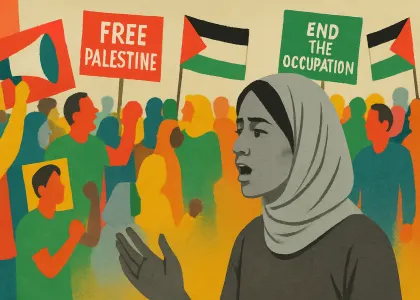
Meanwhile, diaspora Palestinians shouted slogans disconnected from West Bank realities. “There are more demonstrations in London than in Nablus,” one observer noted.
Pragmatism Silenced: Alternatives No One May Discuss
The Emirates plan—envisioning city-based rule and economic partnership with Israel—circulated quietly. Some tribal leaders in Hebron supported it, seeing opportunities for work and stability. Critics called them collaborators. One sheikh’s house was burned by Fatah forces. Zara dismissed the plan as divisive, but others privately welcomed it. One Nablus resident said, “It’s great! People can have work opportunities.” Another was blunt: “Why doesn’t Israel just take it all and make me a citizen!”
Christian and minority voices faced growing pressure. Attacks on churches went unreported in PA media. Some Christians sought integration with Israeli society; others avoided politics entirely.
By 2023–2025, economic collapse deepened the silence. Unemployment soared, salaries went unpaid, and new army gates restricted movement. “People don’t even have the energy to protest,” Zara said. During Iranian missile attacks in 2024, Palestinians sheltered a passing Jewish resident—an unexpected moment revealing complexity beneath political rhetoric.
You can read the full in‑depth Substack version of this article here.
👉 Subscribe to my Substack newsletter to follow my new essays and access all full‑length pieces, including extended interviews, analysis, and research: Israel Diaries – The Deep Dive
Full Series
- Silencing Palestinians with reconciliation on the table
- Roots of resistance, 1967 to 1987
- Voices among the stones, 1987 to 2000
- Silenced twice – the women who led the first intifada
- Gaza and the West Bank – One people? Really?
- Survival mode in the West Bank, 2000 to 2025
- Dreams interrupted, life in suspension in Gaza
Discussion (0)
No comments yet. Be the first to share your thoughts!
Leave a Comment