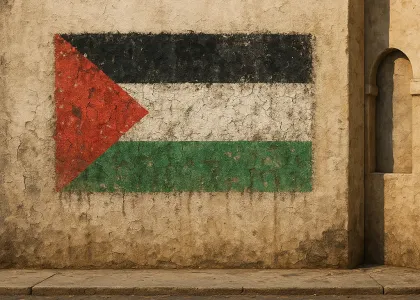
Saudi Arabia’s participation in a UN conference promoting Palestinian statehood suggests alignment with Western diplomatic goals, yet Gulf behavior tells a different story. While Saudi Arabia and the UAE restrict Palestinian symbols at home and avoid risking national interests for a ceasefire, their real priority is stability, controlled borders, and a Palestinian portfolio that does not threaten ties with Israel. This gap between rhetoric and policy reveals how far the Gulf has moved from traditional support for Palestinian independence.
Saudi Arabia’s presence at a three‑day UN conference advocating recognition of a Palestinian state seemed to signal renewed commitment to the cause. Yet at home, Saudi Arabia and the UAE “strictly controlled protests and displays of Palestinian symbols, from flags to keffiyehs,” according to the European Council on Foreign Relations. Despite strong rhetorical support, “no Gulf state seems ready to put at risk their national interests to pressure the warring sides into a ceasefire.” This tension between public messaging and private behavior is central to understanding the Gulf’s real position.
They want a Palestinian portfolio that stops exploding, does not empower Islamist rivals, does not endanger ties with Israel, and preserves their legitimacy at home while expanding influence abroad. In practice, this means a future that does not resemble statehood, even if they say otherwise.
Gulf states have emphasized technocratic, non‑ideological governance. Along with the United States, they urged Mahmoud Abbas to appoint a reform‑minded government, and he complied to a degree. Their recent positions highlight the need for a reformed Palestinian Authority — or even no PA — with “efficient administration” aligned with regional economic interests.
They appear open to localized governance: technocratic councils, municipal authorities, and traditional leaders managing daily services while Israel retains real power. This mirrors the current Area A arrangement under the Oslo Accords, where Palestinians administer education, health services, and garbage collection but not borders or airspace.
Economic development is central to this approach. The UAE and Saudi Arabia have pledged $15 billion for Gaza reconstruction, conditional on technocratic PA governance. Prosperity becomes a substitute for independence, echoing both Gulf domestic development strategies and aspects of Trump’s economic plan for the Palestinian territories.
Population management is another quiet tool. Gulf states will not publicly endorse Palestinian emigration, but their history suggests tolerance for managed outflows. They have admitted Palestinian workers from Lebanon and Syria under temporary arrangements without granting citizenship. If labor migration, education programs, or family reunification ease demographic pressure on the PA, Gulf regimes may view them as stabilizing. Saudi Arabia’s educational programs in Jordan are one example. This approach opens the door to incremental resettlement without formal policy, a departure from the traditional Arab insistence that refugees remain in place until return.
On Israeli control, Gulf governments oppose formal sovereignty over Judea and Samaria, but their behavior indicates tolerance for continued Israeli administration as long as it remains unofficial.
There are limits. Mass displacement remains a red line; images of Palestinians expelled at gunpoint would force symbolic retaliation. Religious provocation at Islamic holy sites would trigger uncontrollable domestic pressure. Total PA collapse without replacement would eliminate the diplomatic cover Gulf states rely on. And any arrangement that expands Iranian influence is unacceptable.
What emerges is the end of Palestinian exceptionalism. Gulf states now treat Palestinians not as a nation seeking independence but as a population requiring development and management. The language has shifted from “national rights” to “development needs,” from “independence” to “integration,” from “historical justice” to “sustainable solutions.”
Western policymakers who continue to promote statehood may, in effect, be working against the vision the region’s most influential Arab states now pursue.
You can read the full in‑depth Substack version of this article here.
👉 Subscribe to my Substack newsletter to follow my new essays and access all full‑length pieces, including extended interviews, analysis, and research: Israel Diaries – The Deep Dive
Full Series
- The Gulf States have moved on from Palestine
- Statehood? Not so fast The Gulf’s real attitude to Palestine
- Neighbours Egypt and Jordan privately oppose Palestinian statehood
- Diplomacy’s Denial: American and the peace process that is not
- Europe loudly says “Palestinian state.” Under its breath: “not really.”
Discussion (0)
No comments yet. Be the first to share your thoughts!
Leave a Comment